
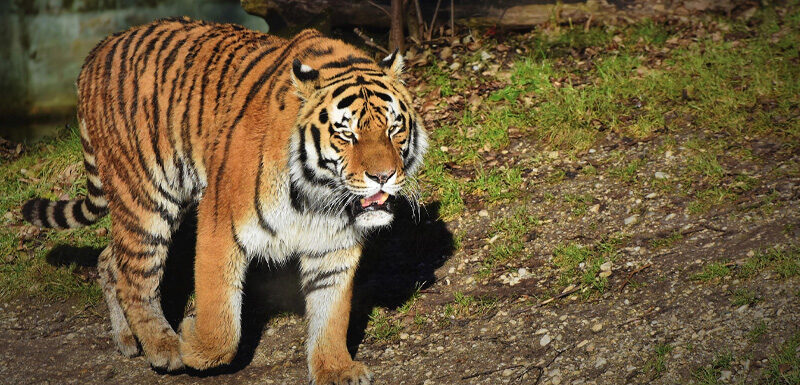
Years ago, I went to the National Zoo in Washington, D.C. I’m not much of a zoo person, but I ended up enjoying the experience. The animal I found most interesting, even to this day, was a Bengal tiger.
I knew a bit about most big cats, but I didn’t really know them well. Wow, I was amazed by this animal. This majestic beast had obvious physical grace and looked like it had been lifting weights its whole life. With both teeth and claws reaching 4 inches in length, it can wrestle a 1-ton water buffalo to the ground.
The tiger is an apex predator, supremely adapted to survival in its ecosystem. It is at the top of the food chain, and no other animal — other than man — threatens it. So, consider the phrase “riding a tiger” which refers to being in a risky or out-of-control situation in which staying on is as perilous as getting off. I suggest that grounds management is often like riding a tiger. So, why would anyone of otherwise sane mind, be foolish enough to try to ride a tiger?
Control is tenuous
Riding a tiger implies barely maintaining control over a situation. I’d like you to consider the once popular spectacle of lion-taming. Lion taming is a similar situation to riding a tiger where control is temporarily maintained over a powerful challenger. Obviously, the characteristic whip and chair of the lion tamer will not protect him/her if the lion really lets loose. Even the sometime pistol-up-the sleeve might not stop an angry beast.
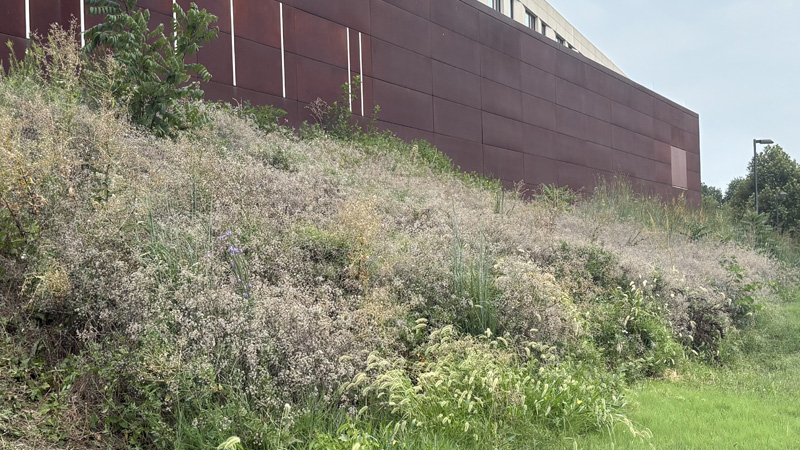
The landscape might be held at bay by my grounds management and tools, but it isn’t a voluntary partnership. Likewise, tiger-riding, and by comparison grounds management, are hopeful endeavors. Nature, weather, pests, etc. and other operational problems can overwhelm our whip and chair. We use these tools through practical application in the hope everything goes as planned. Most often things do go to plan. But, if the lion, or the landscape, really gets irritated, and the deep wild instincts suppressed through management and control rise up, then our illusion of taming disappears, and the lion runs the show.
The tiger doesn’t control the ecosystem
In its ecosystem, the Tiger is the apex of the system. But this doesn’t mean it is the determinant organism.
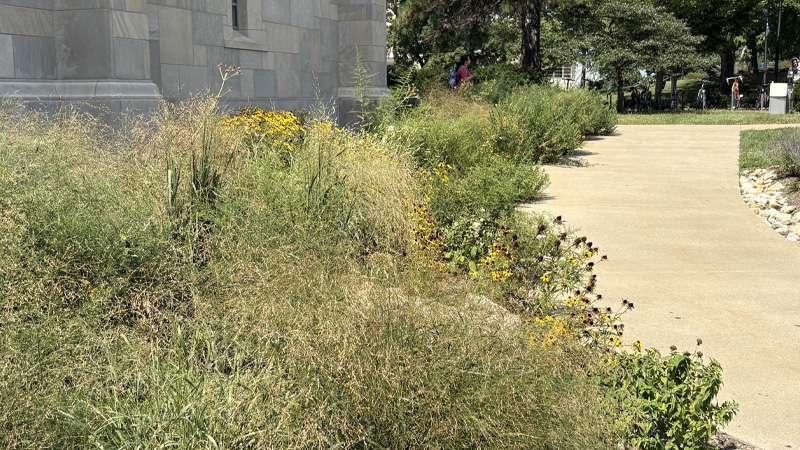
The tiger plays its role, but this role is also impacted by everything else in the system, both large and small, numerous or scarce. The landscape is the combination of all factors within it. Nothing plays such an outsized role within the system where it can be solely focused upon to the exclusion of other factors. There are macro and micro factors, plant-essential elements being an appropriate comparison, each contributing according to need, but all playing an essential role. Fortunately, some fundamental components can be manipulated, but each management action will affect every other, and a large enough imbalance can cause system failure.
In its ecosystem the tiger culls its prey from the sick and old, leaves carcasses for scavengers, suppresses competitors thereby preventing too much predation, and on and on. Only when the tiger fulfills its role does the system succeed. The landscape needs complexity and diversity. It needs all management inputs in the proper order and quantity. To deny the natural system is to invite failure.
Let the tiger be a tiger
A Bengal tiger is the result of evolution and adaptation. It survives in a challenging ecosystem. But move it into another environment and it might not survive. Nature is a harsh and demanding laboratory where failure to adapt to your niche means certain death or even extinction. The size, cunning, speed and amazing environmental/life cycle adaptations it possesses have made it what it is today. These are the factors that define and identify a tiger. So, why would anyone want to “tame” a tiger?
Tigers in captivity might live longer than in the wild, but are they really tigers any longer? Wielding dominion over the landscape entails us asking the same question. What do we lose when we exert rigid control over the garden, managing it into a narrow path, forcing it to be something it was never meant to be? I propose something inherently valuable and beneficial is lost. By taming the landscape, do it lose some of its essential beauty and function?
Set it free
It is highly unlikely that I will ever see a tiger in the wild. Truth be told, I wish I hadn’t seen one in the zoo. What I saw was a shell of majesty. The territory range of a tiger in the wild can be 100 square miles. To see it confined to even the very best enclosure or park is to witness something less. This is true of the landscape.
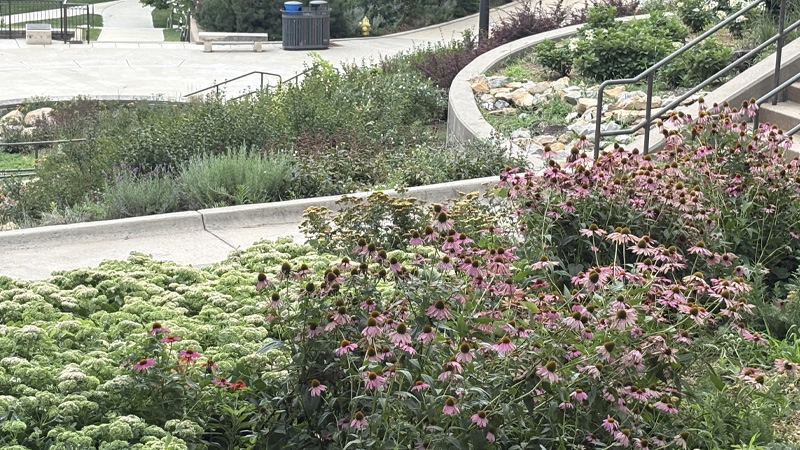
Here in Kansas, I am always awed by the diverse savannas and prairies of our state. These ecosystems are wonderfully balanced in a dynamic blend of complex flora, fauna, geology, hydrology and climate. But the system always continues, even as it changes.
I don’t resist the control necessary to create a soccer pitch or a formal garden. These serve a unique purpose but are usually limited in size. The further we venture from the natural world, the more resources are required to maintain the status quo.
The landscape could be, should be, must be, harmonious in multiple ways with man, the species that impacts the system. But our landscapes shouldn’t only be kept in a cage. We where we can, we shouldn’t tame the landscape, we should set it free.

