
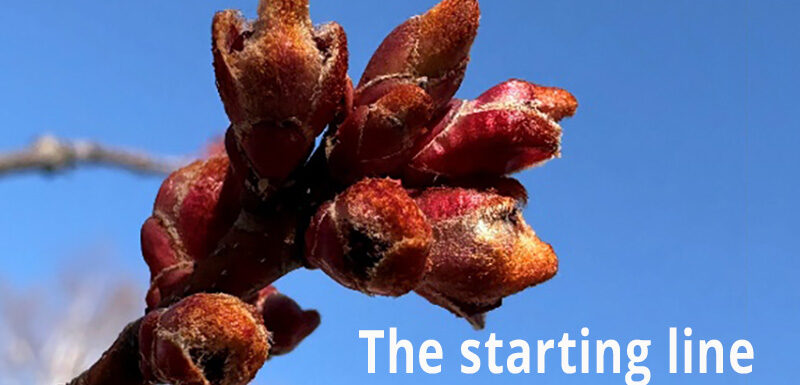
When we think about an Olympic athlete or a band about to step on stage at the beginning of a tour, it is all about the starting point.
All the training, practicing and hours of sacrifice leads them to the starting line or that first note . . . to the big moment. Think about your own career for a second. Think about all the early mornings and late days on the end of a hose; all the irrigation breaks and difficult weather conditions; all for the day when you get to step out of your new office and take over stewardship of a property for the first time. It feels like the beginning of something entirely new.
The truth is, working in turf, whether as a super, assistant, equipment technician or a crew member, is always about starting anew. You are a master of details and motivation for starting again every single day. Each time someone steps up to the green and engages a mower, each time a crisp new cup is cut or even when a new seed is sewn, it is a brand-new moment. As the sun rises and you ready yourself for the day ahead, you can remind yourself that you have never been here before.
The next time you feel burdened by the monotony of it all, stuck in a rut or overwhelmed by life, it is helpful to remember that you can always begin again.
No two moments are ever the same. While our many daily tasks might seem repetitive and monotonous at times, no two moments are ever the same. Sometimes you add, sometimes subtract and sometimes it is all you can do to simply hang on. The storms, the disruptions and the million other things that can go wrong on a daily basis can often obscure the simplicity of beginning again.
And then there are the times when starting over means that you go back to the drawing board. When the process or the program has outlived its utility and the only choice is to chuck it and start over. The inevitability of change is simply too strong, and you must yield to it whether you want to or not.
It may not always feel like this in your daily life, but the opportunity to start anew is always available. With each step or each breath, we always have the opportunity to look at our lives from a new perspective. Each time we enter into a conversation or interaction with someone, it is helpful to remember that it is a brand-new moment; you have no idea what they have been through since you last saw them. Offering both parties the grace to start over can be a powerful medicine.
This notion of starting over does not necessarily mean that you have to throw out the foundation of previous experience, it is more about coming to the realization that you are not completely defined by it. There is always value in your accumulated wisdom and for that you can be grateful.
There are also many times in our lives when the idea of starting over is not an option. Life simply decides for us.
Sickness, personal loss or even a natural disaster can leave us stripped to the bone with no choice but to start over. We see what is really important in our lives and make the decision to keep it close, all the while allowing our lives to unfold in a completely new direction.
Alternatively, there are times in our lives when we choose to make the leap. Leaving a relationship, moving across the country or even taking a big risk in your career. It is not about whether you succeed or fail, it is simply about having the courage to jump anyway.
The truth is, working in turf, whether as a super, assistant, equipment technician or a crew member, is always about starting anew.
But as with every clipping collected in the bucket, there are also an infinite number of smaller, more intimate moments that afford you the opportunity to begin again. A pause, a simple kindness or even a moment of solitude can make a huge difference to you and those around you.
The next time you feel burdened by the monotony of it all, stuck in a rut or overwhelmed by life, it is helpful to remember that you can always begin again. Each moment is a gift. You are not defined by what was, and neither are not held captive by the inevitable patterns of what lies ahead. The burden of impossibility is just a thought; the notion of restriction is just an idea. Both are real in some sense, but they do not have to be true.
So, take a breath, line up the walk mower and choose to mow in a new direction that you have never attempted before. It does not matter if your first pass is a laser or a banana, all that matters is that you chose a new way. One never knows what sort of adventure starting over can bring.
Thanks so much for reading.
Paul

