

Superintendents across the country will benefit from the latest round of research projects funded by the GCSAA at two major research universities.
The latest projects to receive funding for this year are:
- "Nematode resistance management on golf course turf" by Billy Crow, Ph.D. at the University of Florida
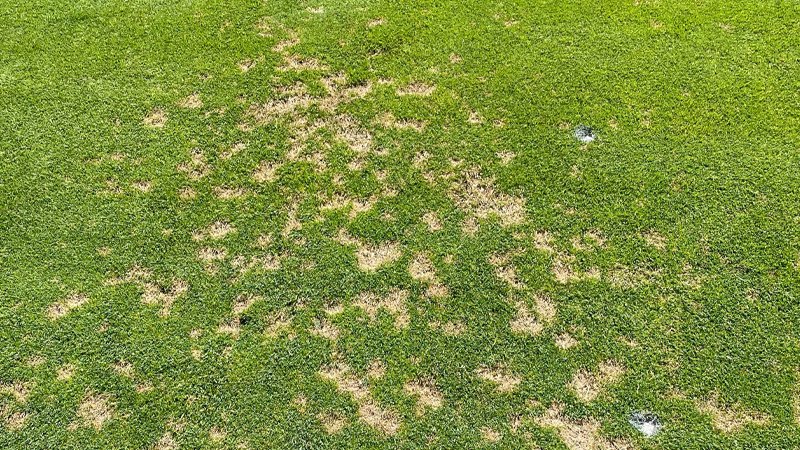
- "Integrating alternative strategies to improve the sustainable management of dollar spot" by Paul Koch, Ph.D., of the University of Wisconsin
 The Wisconsin project also is supported by the Wisconsin GCSA.
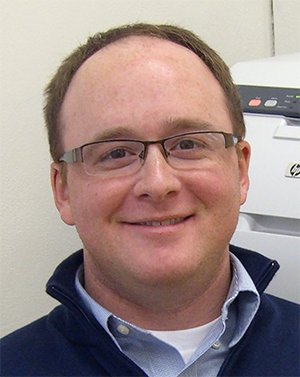
"In this particular project, we're looking to advance precision management of dollar spot that will allow us to pinpoint when and where fungicides can be the most effective," said Koch (right). "This will result in improved disease control and decreased costs for the superintendent."
The University of Florida study is a continuation of an ongoing project. The latest round of support will fund the final three years of the six-year nematicide study. The project assesses a panel of nematicides with the goal of giving turf managers rotational options to manage against resistance.
"The SDHI nematicides fluopyram (Indemnify) and cyclobutrifluram (Trefinti) are the most effective turfgrass nematicides currently available," Crow said. "However, the discovery of resistance to SDHI nematicides in turfgrass nematodes following prolonged use has made it clear that SDHI nematicides should be rotated with nematicides from other classes for resistance management."
Dr. Crow's lab in Gainesville is a global leader in nematode research.
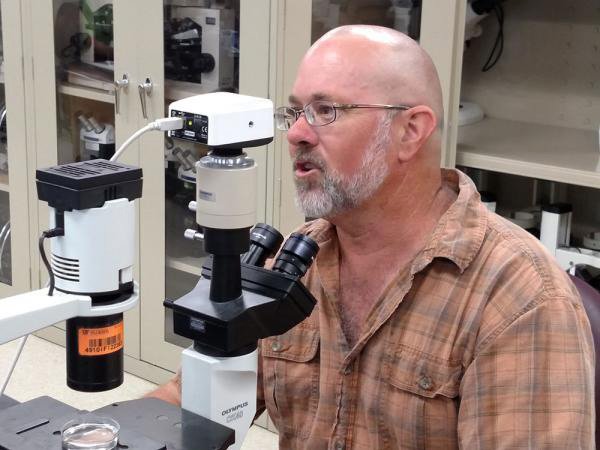
"This first-of-its-kind experiment is a six-year project evaluating 10 different nematicide rotations of SDHI nematicides (Nematicide Resistance Group N-3) with nematicides from other Nematicide Resistance Groups," said Crow (below right). "There are two field trials, one targeting the grass root-knot nematode and the other targeting sting nematode. We are comparing the nematicide rotation programs for efficacy against the target nematodes, turfgrass health, development of nematicide resistance, and impacts on nematode community structure as an indicator of soil health."
 The projects were selected by a committee that included two members of the GCSAA board of directors, superintendents, university researchers and other professional scientists. Each project will receive up to $100,000 from a GCSAA Foundation block grant.
"The costs of conducting turfgrass research costs are rising, but many funding opportunities are decreasing because of cuts at the federal level," Koch said. "That's why the funding provided by the GCSAA and the WGCSA is so critical to advancing research that directly benefits golf course superintendents. In this particular project, we're looking to advance precision management of dollar spot that will allow us to pinpoint when and where fungicides can be the most effective. This will result in improved disease control and decreased costs for the superintendent.
With the 2026 funding, GCSAA funding is supporting nine ongoing university research projects, that total $582,807 in funding for applied turfgrass research.