
Dollar Store style or luxury landscaping

Entry posted by John Reitman in Joe Fearn, Third Way Green
952 views
I drive a 2002 pickup. For my day-to-day commute, household chores, and even around town, this vehicle is perfectly acceptable. But driving any distance becomes uncomfortable, inefficient, and tiring. So, my family's other vehicle is a midsize 2015 SUV that is much more comfortable and actually makes long trips less tedious and tiring. It has comfortable seats, smooth suspension and better gas mileage. All around it better fulfills our needs than my truck. But it isn't a BMW touring sedan.
I once drove from North Carolina to California in a BMW 500 series. All I need to say is that riding in this car was a joy. Landscaping can be a lot like this. We often are forced to create landscapes that aspire to be BMWs when we are actually driving a 20-year-old pickup. Truth be told, you get what you pay for, although we all make do with what we have.
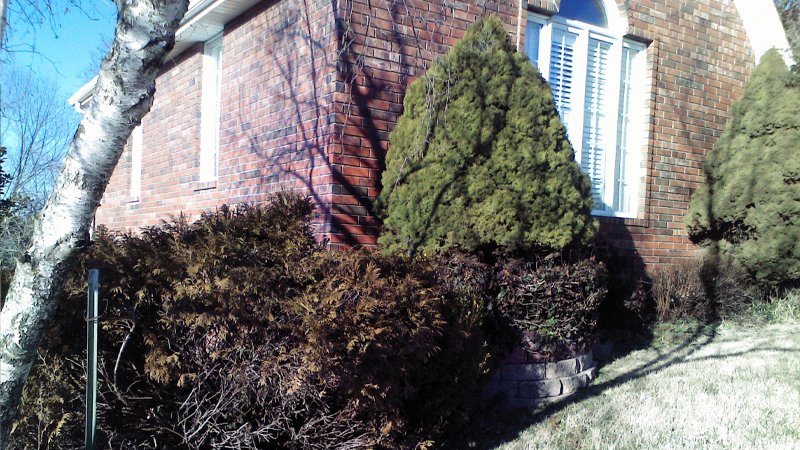
There is no substitute for quality investment
Years back, the university where I worked was having a trustee meeting and would be inviting these people to campus. Trustee meetings are important events involving important decision makers for our school. The morning of said gathering I noticed a man emerge from a stylish car wearing a clearly high quality, well-tailored suit. Obviously, a trustee I correctly surmised. This person plainly invested in their appearance. Our landscapes must do the same.
Top-tier landscapes utilize top-tier materials. They prioritize the landscape in equitable importance to other valuable organizational pursuits. They do not relegate landscaping decisions to the end of the discussion or worse, neglect them wholesale.
It is a simple truth you cannot pretend to pursue landscape excellence. When landscaping is not resourced as a priority, it is readily apparent.
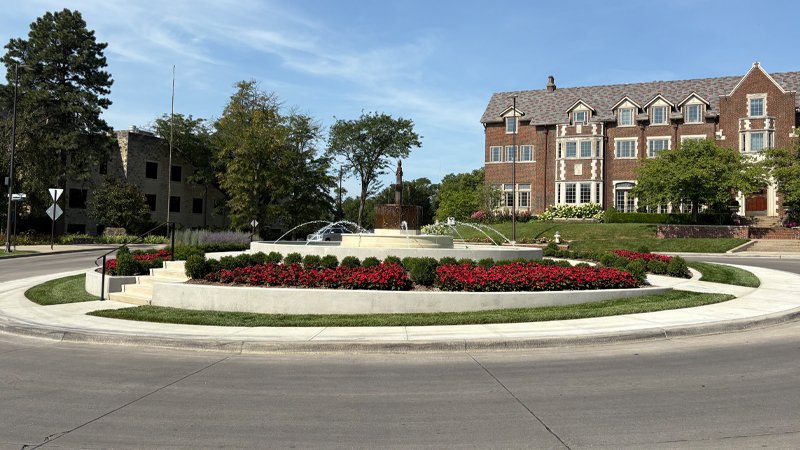
Should we pursue low maintenance
Low maintenance has long been the Holy Grail of landscaping. Many operations seem to be seeking it, but no one can unequivocally say they have located it.
Like the eternal tension between formal and informal gardens, there is a tension between low-maintenance and high-maintenance (high-execution) landscaping. I believe low maintenance is a cultural intensity, not a style. I also believe that low-maintenance gardens cannot perform in similar ways to their high-execution kin, but will inevitably look like low-grade landscapes.
Maintenance threshold expectations should be considered when designing a landscape, but should not be the highest aspiration; horticultural effectiveness, organizational need and resource allocation should be.
Low maintenance is not an investment threshold
Low maintenance is an occupational limit, not necessarily a design or resource allotment strategy. It is meant to pervade all aspects of the grounds-management stream, not be a blanket statement overwhelming smart design, maintenance and outcome actions. Far too often it is a vague goal restraining a robust design/installation/maintenance process.
Low maintenance has become synonymous with low financial and resource investment, resulting in obviously sub optimal landscapes. As grounds managers we are a professional voice that understands the limitations we must live in while also being capable stewards capable of achieving excellent results within our means.
I have never seen a conscientious grounds manager push a design that cannot be achieved. We are a pragmatic bunch. Great results can be achieved within resource limitations, but the design, and resource allocation, must reflect those limitations.
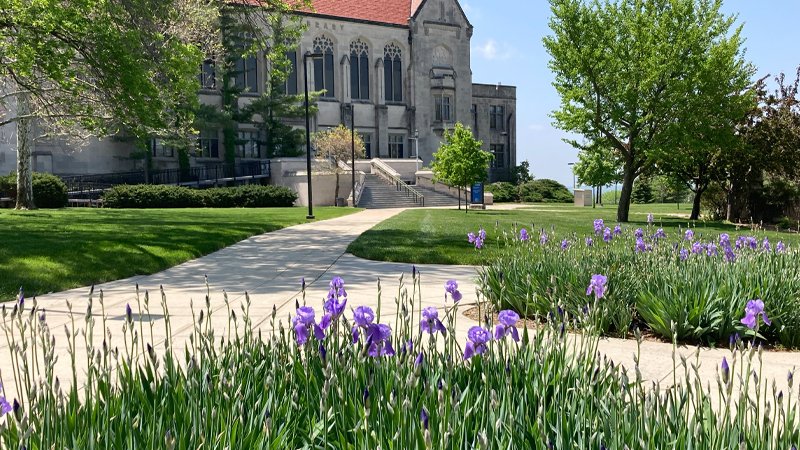
How we get here
In my experience, many organizations limit landscape resources (sometimes for good reason) but do not limit expectations. Or, they drive high expectations, but don't fully support the resources needed to achieve the results.
My blog page is called Third Way Green in an effort to address this paradox. Any successful landscape must pursue the culmination of a three-step process. First, assess the strategic landscaping needs of the parent organization. Then, assess what resources the parent entity is willing to invest in pursuing those needs. Lastly, determine a horticulturally viable management regime to meshing both previous considerations. This seems straight forward but competing objectives often derail this process.
I am not advocating for more resources or lower expectations. I believe successful grounds management must blend resource allocation and organizational expectations into an achievable system, or it is destined to fall short of both.
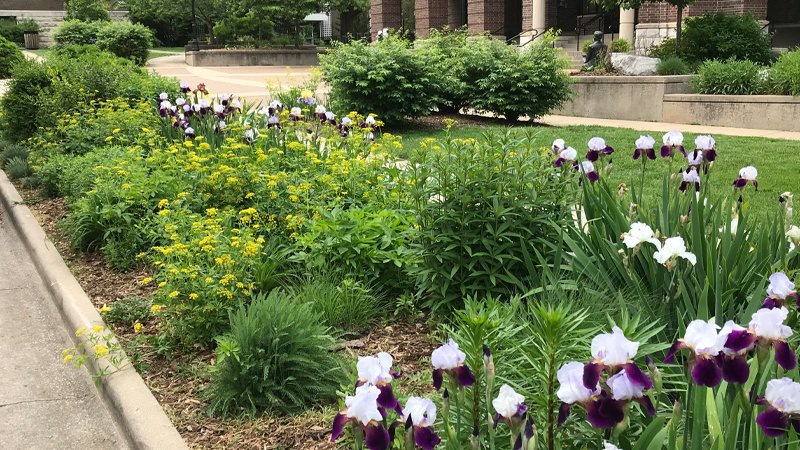
Dynamic landscaping can differentiate
Grounds management generally exists on a bell curve. Most landscapes survive in the comfortable middle and perform effectively in that realm. Enough resource investment and organizational alignment help ensure a good job. Too little of both influences failure.
But what if you want to set yourself apart? I suggest there is a way to change the objective whereby the budget is not the determinative metric.
Successful landscaping will not be assured whether cheap or expensive. A landscape that is harmonious with its organization will reflect the ideals of the parent. A landscape resting easily within the ecosystem it grows in will also.
Only through harmony of organizational alignment and horticultural practicality will the landscape succeed.
0 Comments
Recommended Comments
There are no comments to display.